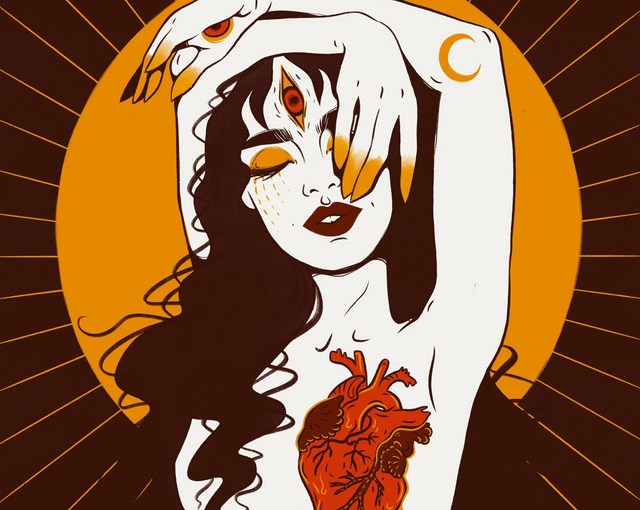
I ran from love terrified Until I could go no further There I collapsed…finished But I heard something In my dirt filled ears Lying in the land of the dead It was the softest music at first Like nothing I had ever heard before Slowly I began to feel the tug of gravity Suddenly it lifted me up up up Out of the dirt All the way into the big endless sky Suddenly clouds of dark matter split wide A golden light Unlike anything I had ever seen Shot right through me I felt love in every cell screaming Love had raised me from the dead Then I heard thunderous words Echoing from everywhere at once
NOTHING COULD EVER SEPARATE YOU FROM MY ❤️
Then I heard every cell In me singing I found the music Was always in me I just never heard it Like Apollo singing Through the underworld Nothing can touch me now I’ve got the music in me
“If a man does not keep pace with his companions, perhaps it is because he hears a different drummer. Let him step to the music which he hears, however measured or far away.”
—Henry David Thoreau
This begins my master class on how best to apply philsophy. Henry spent a long time in the woods, he went a little crazy. Bodhidharma stared at a wall for years. Cold Mountain lived on a cold mountain. Diogenes lived in a wine barrel. What do most of us do?
Consume and get fat and die of rich person diseases, most without a positive balance in their checking accounts, how absolutely ironic and funny.
Give up the ghost, you are already dead.
Let’s start there, you are a goner. You are not going to win life. Your purpose isn’t to be free or have a happy life or be rich or poor, it’s to spread your DNA and die, to be consumed, to allow the next wave of being.
But let me tell you something, this is the doorway to joy, to Eden.
Failure is freedom!
I feel most folks are utterly asleep and full of 💩 There, I said it. We live in a fishbowl full of turds. I don’t want to be a winner. I don’t want fame or riches. I ain’t gonna start a YouTube channel or TikTok. I mean, I have a YouTube channel that gets 1-100 likes mostly per post. No one likes what I like really and that’s just fine by me.
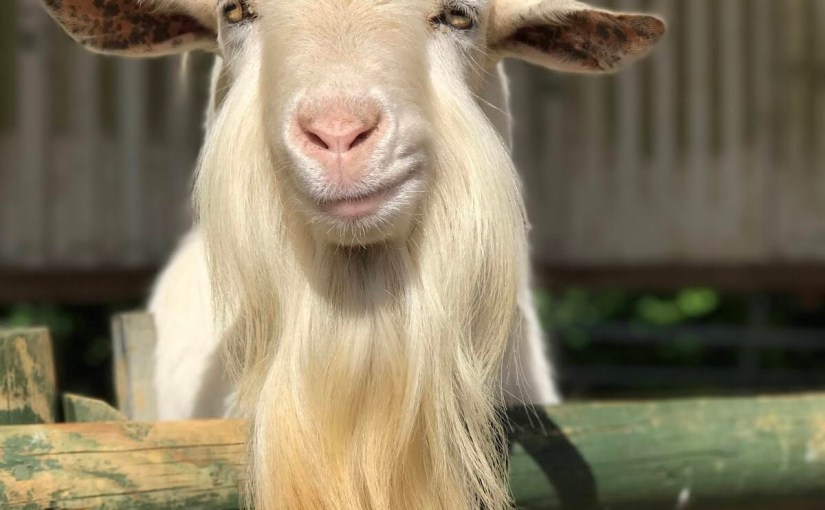
“The straightforward and good person should be like a smelly goat— you know when they are in the room with you.”
—Marcus Aurelius
I’m weird, a misanthrope, a smelly 🐐 but I love life on this little blue marble, I really do. So I ain’t all bad. Hell is other people Sarte mused and he was close, what he should have said is, hell is yourself, enjoy your stay.
I was one of the walking dead 💀 how did I find my groove, I failed and failed and failed. I became a bum. I wrote my heart. I puked my guts out. I read broadly and saw I was just another bastard. Welcome to the party.
The funniest thing, once you finally embrace the above and stomp around and splash in it, a funny thing happens, people hear you and see you. Your worst fears realized. They want your freedom. Some hate you for it, others sit at your feet.
Well, I don’t have anything to offer the little birds but a kick in the ass out of my nice comfy nest.
There you go, that’s lesson one in how to be a loser.
“The arising and the elimination of illusion are both illusory. Illusion is not something rooted in Reality; it exists because of your dualistic thinking.
If you will only cease to indulge in opposed concepts such as ‘ordinary’ and ‘Enlightened’, illusion will cease of itself. And then if you still want to destroy it wherever it may be, you will find that there is not a hairsbreadth left of anything on which to lay hold.
This is the meaning of: ‘I will let go with both hands, for then I shall certainly discover the Buddha in my mind’.”
‘The nature of the Mind when understood, No human speech can compass or disclose. Enlightenment is naught to be attained, And he that gains it does not say he knows.’
-Bodhidharma
—from The Zen Teaching of Huang Po
I’ve been studying the early sources of zen, which is the Japanese name and Buddhist/Indian sources. I use the lower case there because what is written is not Zen. You can’t really study Zen on anonymous social media sites. But the discussions can be interesting and revealing of our dualitic thinking.
Anyone claiming truth is making a power play.
No word can reveal this, silence enshrines it.
Piercing sensory perception and conceptual thought brings an immediate end to illusion. This is directly seeing and perceiving with the mysterious intuition. This awareness is not exclusive to Zen. Plotinus and Eckart seemed to have come to the same place as the sages.
Hands off, yes, indeed.
—-
I think this is where the best art comes from.
Feeling this fire is one aspect, but walking into it is a whole other experience.
Walking into the fire is an act of self immolation, sacrifice and an overcoming of fear and is maybe the only courageous thing we can do.
No longer bound by talent or skill or lack thereof, but truly transcending these.
I would say walking into the fire is an act of faith as well and opens a portal to nowhere and everywhere.
The raw expression of Jack Kerouac from ‘On the Road’ or the writing of his insane mad friend, Neal Cassady, being western examples.
An enlightened, if sad teacher, Harold Bloom, explored the American Sublime deeply through our literature. I like his thinking on these subjects. He’s a bit too brilliant for me though 😉
Reading Jack Kerouac again and Neal recently and Bloom’s Opus, The Daemon Knows as well as the old zen texts.
I couldn’t sleep and the Lion told me to offer myself as a lamb to itself. It said it is all that is moving. It told me love kills. To take my small flame I have cultivated and merge it with the only real 🔥
And I wrote this with some help from my friends…
“Love is like the lion’s tooth.” —W.B. Yeats
I’ll tell you a secret about love Life is love and love is life A riddle and plainly known
I’ll tell you a secret about love You can cultivate your little flame But love will kill you when you come close
I’ll tell you a secret about love Though love may slay you as a lamb You shall be raised up a lion
—smelly goat
“You that come to birth and bring the mysteries, your voice-thunder makes us very happy. Roar, lion of the heart, and tear me open!” – Rumi
Only now do I realize I have prepared myself as an offering to the Lion.
“No person is free who is not a master of himself.”
This quote is usually attributed to Epictetus, but found in works attributed to Pythagoras, and stated as: “None can be free who is a slave to, and ruled by, his passions.”
—As quoted in Florilegium, XVIII, 23, as translated in Dictionary of Quotations (1906) by Thomas Benfield Harbottle, p.368
“The art of living is more like wrestling than dancing, because an artful life requires being prepared to meet and withstand sudden and unexpected attacks.”
—MARCUS AURELIUS, MEDITATIONS, 7.61
I often see Christians projecting their beliefs on Stoicism, let us compare them and be clear how these world views differ and overlap. I practice Stoicism and like to associate with others doing so, ancient and modern. There seems to be a tendency toward atheism these days among Stoics. Ancient Stoicism had the concept of Logos which represented a God figure, Zeus, but this concept was not defined by a personal relationship, as it is in Christianity. Zeus represented nature. I am not debating those differences between Stoics in this little essay. Disclaimer, I have no interest in Jesus or Christianity, beyond studying their historical impacts. I grew up as an evangelical Christian. I find the Stoic spiritual practices of ethics and virtue to live the best life, far superior to belief and faith in things unseen. Stoics help themselves using their reason and will.
Stoicism and Christianity are both concerned with how best to live, but Christians feel this life is a shadow of a life to come. The Stoics didn’t talk much about an afterlife and were agnostic about what, if anything lies beyond death. For the Stoics, what matters isn’t so much what may or may not happen after death, but how we make best use of the time we have now. This is one of the main reasons I practice Stoicism and not a religion idolizing people or worshipping a god beyond nature or the life we know now.
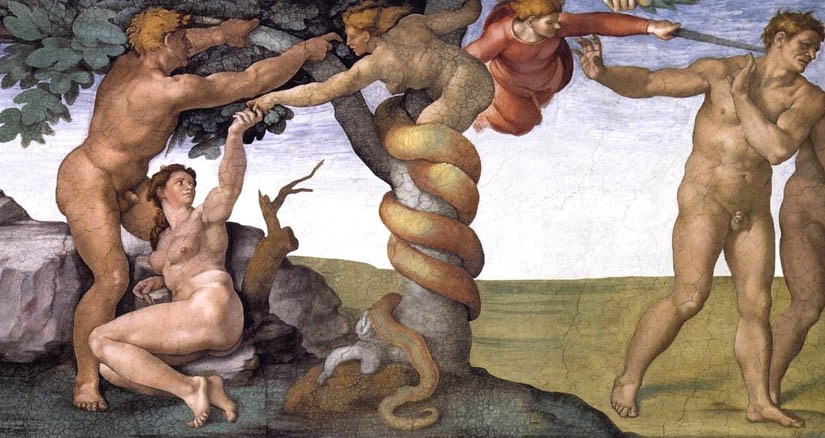
I do not agree with the Christian world view on original sin and death, which is why I practice Stoicism and not the Christian or any other religion. Stoics are focused on the life we have, not one to come. The Stoics viewed death as natural, a return to Nature. The Stoics believed that life should be lead through actions rather than words. I concur. What we do matters to us. The Stoics provide practices to help you control your reactions to thinking and difficult physical circumstances now, which is the only thing in your control.
Discourses Book 1.1 “About things that are within our power and those that are not.”
Epictetus speaks for Zeus/Nature, from Discourses,
“…I’ve given you a certain portion of myself, this faculty of motivation to act and not to act…the power to make proper use of impressions.”
—Epictetus Discourses, Fragments, Handbook, translated by Robin Hard, Book 1.1.12
Stoicism is an Ancient Greek philosophy formed in Athens while the Greek world was in chaos after the death of Alexander the Great. Zeno of Citium founded the Stoic school of philosophy, which he taught in Athens from about 300 BC. Stoicism is based on the moral ideas of the Cynics. Stoicism laid great emphasis on goodness and peace of mind gained from living a life of virtue in accordance with nature.
“Now, If virtue promises to enable us to achieve happiness, freedom from passion, and serenity, then progress towards virtue is surely also progress towards each of the states.”
—Epictetus Discourses, Fragments, Handbook, translated by Robin Hard, Book 1.4.3
(Epictetus does seem to often have a personal view of the divine as related by Arrian in Discourses.)
The Greek term for word is Logos. Five hundred years before Jesus was born, Heraclitus, a Greek philosopher, used Logos (the word) to explain what he saw as the universal force of reason that governed everything. He said all things happen according to the Logos. This belief became the foundation of Stoicism. Greek speaking Jews came to view the Logos as a force sent by God. In the Gospel of John, Jesus is referred to as the Word, and the Word was made flesh and dwelt among us; he is the driving force sent by God.
Modern day Christianity has a splintered past and is practiced differently between the Protestants and Catholic Church. Eastern Christianity is often thought closer to the original church that formed after the death of Jesus of Nazareth. I would argue that the Pauline Gospel is the foundation for the modern Western church more than other competing strains of early Christianity. This form of Christianity developed from the beliefs and doctrines espoused by the Hellenistic-Jewish Apostle Paul through his writings in the New Testament. These are muddy waters.
According to Christianity, it is only through Jesus of Nazareth that people can achieve eternal salvation. Humans save themselves through grace instead works, while the forgiveness of sins comes by faith alone.
I do not concur due to my experience. I take no one’s word as final on life and death. I am living this life now. Christian belief to me is a tyranny and not well reasoned or aligned with natural life and death. There are no similar concepts in Stoicism, where what you do is its own reward or punishment now, in the moment. We practice to be ready to act with reason and not be overwhelmed by emotions or fear.
Stoicism and Christianity are both monotheistic. Stoicism follows Heraclitus and believes in one Logos; Christianity follows Jesus, and requires followers to believe in the one true God and have no other gods before him [her]. Additionally, both Stoicism and Christianity serve the will of the Logos/God. They teach we can liberate ourselves from fear and anxiety by submitting to the will of the Divine.
In Christianity, the Word (Logos) was made flesh and dwelt among us. In Christianity, a relationship with the Logos is much more personal.
“The Stoics also referred to the seminal logos (“logos spermatikos”), or the law of generation in the Universe, which was the principle of the active reason working in inanimate matter. Humans, too, each possess a portion of the divine logos. The Stoics took all activity to imply a logos or spiritual principle.” — https://en.m.wikipedia.org/wiki/Logos#Stoics
“The Stoics often identified the universe and God with Zeus, as the ruler and upholder, and at the same time the law, of the universe. The Stoic God is not a transcendent omniscient being standing outside nature, but rather it is immanent—the divine element is immersed in nature itself.”
“The Stoics [defined] free will as a voluntary accommodation to what is in any case inevitable. According to this theory, man is like a dog tied to a moving wagon. If the dog refuses to run along with the wagon he will be dragged by it, yet the choice remains his: to run or be dragged. In the same way, humans are responsible for their choices and actions, even though these have been anticipated by the logos and form part of its plan.”
—(xix-xx) Gregory Hays
Another big difference between the two worldviews is Christians ask God for help, while the Stoics seek help from within. Through prayer, Christians ask to be released from suffering, healed when sick, and comforted in sorrow. By contrast, Stoicism tells us that if we want any good, we need to get it from ourselves. No spirit will relieve us from our pains.
Stoicism and Christianity have competing views about human nature as well. For the Stoics, nature has instilled people with the capacity to reason, which we can exercise to live out virtuous, dutiful lives. Christians, on the other hand, believe people are born with original sin, which has corrupted our internal moral compass. While it is possible to better ourselves by using reason, it is only by the grace of God that people are improved and saved.
This was just a high level survey of some of the differences between Stoicism and Christianity. I have nothing against Christians or anyone practicing Stoicism. The historical Jesus was not a Stoic as far as we know. We practice Stoicism here to live the best we can in a chaotic world beyond our control, bounded by birth and death. I’d argue Stoicism is about being the best Human Being we can be here now. We should not hold dogmatically to the ancient Stoics or cultural beliefs in my personal view. Epictetus said roughly the same. I think discussing these and other worldviews is beneficial if you can keep an open mind. But the words are just pointers to how to choose the best action any given moment.
“Such is the law that God has laid down, saying, ‘If you want anything good, you must get it from yourself.’”
—Epictetus Discourses, Fragments, Handbook, translated by Robin Hard, Book 1.29.4


 Quantum Heart