Life may be but a dream. Dream or not, we appear here as dreamers of dreams, so how best shall we live? The stoics still have some of the best practical advice in my opinion.
The below is from a stoic discussion board. I did not write this, but thought it damn good.
Stoicism 101: The Stoic Love for Mankind
The Stoics believed that we are essentially social creatures, with a ‘natural affection’ and ‘affinity’ for all people. This forms the basis of Stoic ‘philanthropy’, the rational love of our brothers and fellow citizens in the universe. A good person
“displays love for all his fellow human beings, as well as goodness, justice, kindness and concern for his neighbour’, and for the welfare of his home city (Musonius, Lectures, 14).” – Donald Robertson
Humans are rational and social beings.
Although we learned that friendship and other people are ultimately indifferent, they are very much preferred. The Stoics prefer to live with a friend, a neighbor, and a housemate, but they do not depend on them for the Good Life.
Basically, Stoics are able to live the eudaimonic life without a friend but they prefer not to go without one. Why? Because of their natural affection for mankind and because they can practice the virtues much better when around others (think about justice and courage).
“We ought to do good to others as simply as a horse runs, or a bee makes honey, or a vine bears grapes season after season without thinking of the grapes it has born.” – Marcus Aurelius
It’s our human nature to do good to others and we should not care whether they care or not. Marcus goes so far as to say that all our actions should be good ‘for the common welfare.’ This is our nature, it’s our job.
And he could practice this very well since he was the Roman emperor… Wouldn’t we like that the people in power only had the common good in mind rather than their own?
There’s a caveat to this: The main reason to act for the common welfare is the underlying virtue of justice. We live in accord with virtue and therefore benefit ourselves when we act for the common welfare. Also, the better a person has developed himself, the better he can serve mankind. As Rudolf Steiner said, “If the rose adorns itself, it adorns the garden.”
“Man is born for deeds of kindness; and when he has done a kindly action, or otherwise served the common welfare, he has done what he was made for, and has received his quittance.” – Marcus Aurelius
Do good for the sake of doing good. Expect nothing in return, remember, virtue is its own reward.
And what if others do wrong?
The Stoics believed that nobody errs on purpose. People act the way they think is best for them. They don’t know any better.
Massimo Pigliucci said it well:
“The wrongdoer does not understand that he is doing harm to himself first and foremost, because he suffers from amathia, lack of knowledge of what is truly good for himself. And what is good for him is the same thing that is good for all human beings, according to the Stoics: applying reason to improve social living.”
The wrongdoer does wrong to himself. We should not blame them but rather pity them. As Epictetus said,
“As we pity the blind and the lame, so should we pity those who are blinded and lamed in their most sovereign faculties. The man who remembers this, I say, will be angry with no one, indignant with no one, revile none, blame none, hate none, offend none.”
Don’t hate the wrongdoer, he does not know any better. It’s your job, because you see, to act as an example and do the right thing for its own sake. Do it for yourself (at the same time it will benefit everybody else).
It’s what you do that matters. It’s what you do that makes your character.
I. Heart to heart, smitten by inner thunder, and the veil between our souls is torn asunder. Naked feelings, purity of our being, and no more doubt to stop what we are seeing. Eye to eye, beyond the world of form, as we transcend the voices of the storm. No more division, only sounds of bliss, as we dissolve in an eternal kiss.
II. I believed, but that only caused me to doubt, and I could not be devout, for the belief could be wrong, and I could not complete the rapturous song, but now I see it is a call of destiny, and the song is flowering, it is all-devouring, a passion so pure I drop a tear, but of blood red in lyrics that are shed into a shoreless sea of love and beauty.
III. My love is now infinite, it is embracing all time without limit of any kind, a never ending source of rapture sublime. I cannot shake it, like a dream or a thought, it cannot be fought, this love I’ve got. When the sun is standing still, this love I still feel, and when the moon is dim, and the earth is grim, it is still aflame, this love without shame, without desire, pure will, on fire.
IV. Dancing in a trance of romance, without a dancer, only the dance, the free movement of circumstance, like the planets and moon floating in a swoon, my true will in motion, an act of devotion, for union with the one, the all, and none, for weal or for woe, above or below, with a smile or a tear, with the blues or a cheer, for my law is, Do what you WILL with LOVE and no fear.
V. Love does not fade like a romantic serenade, even when we are apart, there is the eternal song of the heart, and no matter how distant from each other we may be, we are still united by the arms of eternity, and still we converse in the inner universe, with feelings beyond sense, without pretense, with words without letters, meaning without fetters.
VI. I love you more than words can convey, but here I am with so much to say. I love you, my dark flower, during every hour of the day, you have changed my heart and made me want to stay in this world of ignorance, greed and dismay, for you, for us, and for the lovely Way, the Will of Pan, and Nature’s play. I love you, my dark flower, my Rose of Agape.
VII. A reverent kiss, this lyric of love, for you, and every goddess below and above, for you are the One, the Goddess BABALON, the moon in scarlet riding upon the sun, drunk on the blood of the stars of dawn, my BABALON, my love, my flower, whom I call upon this passing hour, for life or death, with fleeting breath, for all, for one, O BABALON.
“No thing great is created suddenly, any more than a bunch of grapes or a fig. If you tell me that you desire a fig, I answer you that there must be time. Let it first blossom, then bear fruit, then ripen.”
As I have practiced stoicism, what I find online is often superficial and analytical and unsourced. Pierre Hadot is an exception with his books “The Inner Citadel” and “Philosophy as a Way of Life.” He presents the stoic spiritual practices that must be practiced to benefit from.
I have noticed a trend in the modern stoics relying heavily on written commentary and readings and not a lot of talk on practical application. Many argue esoteric points missing the heart of Epictetus in my opinion.
Books are good weights, but not the real thing.
“Epictetus’s chief concerns are with integrity, self-management, and personal freedom, which he advocates by demanding of his students a thorough examination of two central ideas, the capacity he terms ‘volition’ (prohairesis) and the correct use of impressions (chrēsis tōn phantasiōn), Heartfelt and satirical by turns, Epictetus has had significant influence on the popular moralistic tradition, but he is more than a moralizer; his lucid resystematization and challenging application of Stoic ethics qualify him as an important philosopher in his own right.”
Thus it is very difficult to discuss these topics online without coming off as a moralizer of your own viewpoints when no one can see the application of said practices in your life.
Should we then say nothing online? Perhaps. But there is benefit in discussing and wrestling and pointing to the gold imho, but these dialogues are no substitute for practice and application.
I, as all of you, am a work of art in progress.
Epictetus spoke from the heart and was funny, not just in his mind. His philosophy was lived and practical.
You have to attain on your own. We can’t just moralize our viewpoints to others. Around normal folks not versed in these practices, example is the best teacher.
The below from “A SELECTION FROM THE DISCOURSES OF EPICTETUS WITH THE ENCHEIRIDION”
In every thing (circumstance) we should hold these maxims ready to hand:
Lead me, O Zeus, and thou O Destiny, The way that I am bid by you to go: To follow I am ready. If I choose not, I make myself a wretch, and still must follow.
But whoso nobly yields unto necessity, We hold him wise, and skill’d in things divine.
And the third also: O Crito, if so it pleases the gods, so let it be; Anytus and Melitus are able indeed to kill me, but they cannot harm me.
Once you know the I AM as you, you will go beyond the I AM into the Absolute, where all is then available to you.
I had to face the worst and most evil in myself and in my family.
I had to expel my hatred and anger.
It was the hardest thing I have had to do.
Enacting your will is the only thing that grants you power.
When you have come to the beginning, you will come to the end.
“The life of a person is a circle. From childhood to childhood. So it is with everything where power moves. When a vision comes from the Thunder beings of the west, it comes with terror, like a Thunderstorm. But when the storm of the vision has passed, the world is greener and happier. For wherever the truth of vision comes upon the world, it is like a rain. The world you see is happier after the terror of the storm. It is not enough to have a vision. In order to have its power, you must enact your vision on earth for all to see.
I have witnessed the miracle of love today. I am humbled and in love with love. It is not love that must be found, it is us who strays from it. Today love has shown me, anything is possible, where two or more gather in solidarity of heart.
There was a great evil lurking in my family I have wrestled with for years. I became love’s flaming sword in the hand of god. Through courage and righteous anger, it was called out and its head cut off. In the shadow of that sacrifice, courageous acts of love filled the void. Cleaned out the puss and planted seeds sprouted where death and decay had reigned.
I cannot tell anyone the meaning of life. But what I was apart of today, has brought me back to the only meaning I could know. I am a witness of love and forever shall I hold it high in mind and body and never fear the lowly or the lost.
Do you remember, 21st night of September? Love was changing the mind of pretenders While chasing the clouds away Our hearts were ringing In the key that our souls were singing As we danced in the night Remember How the stars stole the night away, oh yeahHey, hey, hey Ba-dee-ya, say, do you remember? Ba-dee-ya, dancing in September Ba-dee-ya, never was a cloudy dayBa-du, ba-du, ba-du, ba-duBa-du, ba-du, ba-du, ba-du Ba-du, ba-du, ba-du-da, yeahMy thoughts are with youHolding hands with your heart to see you Only blue talk and love Remember How we knew love was here to stay Now December Found the love we shared in September Only blue talk and love Remember True love we share todayHey, hey, hey Ba-dee-ya, say, do you remember? Ba-dee-ya, dancing in September Ba-dee-ya, never was a cloudy day There was a Ba-dee-ya, say, do you remember? Ba-dee-ya, dancing in September Ba-dee-ya, golden dreams were shiny daysThe bell was ringing, oh, oh Our souls was singing Do you remember, never a cloudy day, yowThere was a Ba-dee-ya, say, do you remember? Ba-dee-ya, dancing in September Ba-dee-ya, never was a cloudy day There was aBa-dee-ya, say, do you remember? Ba-dee-ya, dancing in September Ba-dee-ya, golden dreams were shiny daysBa-dee-ya, dee-ya, dee-ya Ba-dee-ya, dee-ya, dee-ya Ba-dee-ya, dee-ya, dee-ya, dee-ya Ba-dee-ya, dee-ya, dee-ya Ba-dee-ya, dee-ya, dee-ya Ba-dee-ya, dee-ya, dee-ya, dee-ya
We may think we are done with love, but love ain’t done with us.
Not that anyone asked or needs to know, but know who you are reading.
A human being.
“I will govern my life and thoughts as if the whole world were to see the one and read the other, for what does it signify to make anything a secret to my neighbor, when to God, who is the searcher of our hearts, all our privacies are open?”
—Seneca the Younger
I am no nihilist.
I am no atheist.
I am no agnostic.
I am no believer.
I am no mystic.
I am no Angel.
I am no spy.
I am no Demon.
I am a human being.
I move swiftly, like 💨 and 🔥
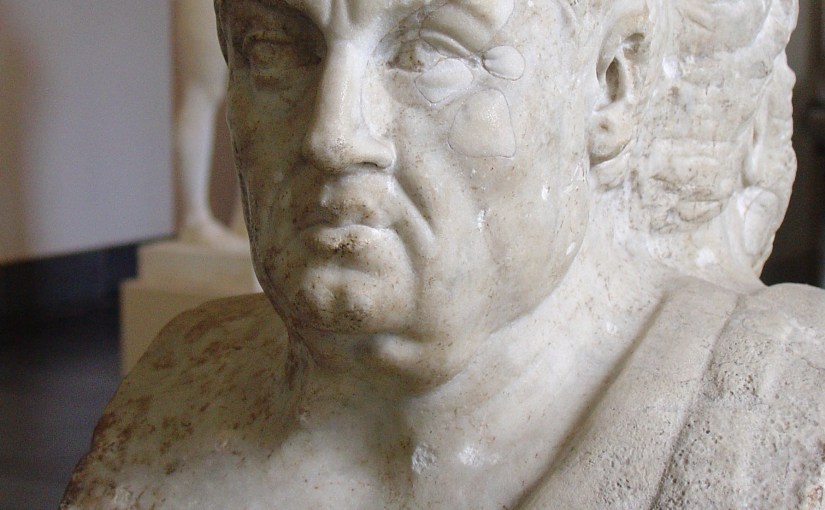
Seneca the Younger spoke against the folk religion of the common people. But he had a deep sense of the invisible mover of our Will, God. Choose your name. Let us call it the original human religion.
I do not deny the invisible hand in my life, truly, I credit it with creating my will and body. I do not preach about this god. I reflect on the beauty of it in my life. I cannot teach this god. I cannot reveal this god to you. I cannot name it, nor do I claim it. Nor do I feel myself more special than any other. But I know this as I know my breath. Both mysterious in a way and profoundly beautiful. I am not so arrogant to imagine myself god’s special creation. This is all special and wonderful and beautiful and the ugly is beautiful too in a way. God itself can correct me through my clear burning Will, but no human could.